Preview

Fine Chemical Technologies

Advanced search

The double-blind peer-reviewed scientific and technical journal Tonkie Khimicheskie Tekhnologii [Fine Chemical Technologies] highlights the modern achievements concerning fundamental and applied research in the fine chemicals industry. It is a forum for cooperation between Russian and international scientists. Tonkie Khimicheskie Tekhnologii [Fine Chemical Technologies] publishes the results of original experimental and theoretical research in the form of original articles, brief reports, and authors' reviews, as well as forecasting and analytical articles in the field of fine chemical technologies and related sciences.

Main topics of the journal:

- Theoretical bases of chemical technologies;
- Chemistry and technology of organic substances;
- Biochemistry and biotechnology;
- Chemistry and technology of medicinal compounds and biologically active substances;
- Synthesis and processing of polymers and polymeric composites;
- Chemistry and technology of inorganic materials;
- Analytical methods in chemistry and chemical technology;
- Mathematical methods and information systems in chemical technology.

Tonkie Khimicheskie Tekhnologii [Fine Chemical Technologies] has been accepted for Scopus since September 2021.

Tonkie Khimicheskie Tekhnologii [Fine Chemical Technologies] is included in the database of Russian scientific journals, i.e., Russian Science Citation Index (RSCI), hosted on the Web of Science platform. It is reviewed in the Chemical Abstracts international database and is a part of Ulrich's Periodicals Directory as well as the Directory of Open Access Journals (DOAJ). The journal is included in the Science Index on the eLIBRARY platform.

The journal is included in the list of leading peer-reviewed scientific journals and editions, approved by the State Commission for Academic Degrees and Titles of the Russian Federation.

A double-blind peer review method is mandatory for processing of all scientific manuscripts submitted to the Editorial Board of Tonkie Khimicheskie Tekhnologii [Fine Chemical Technologies]. All manuscripts are accepted for publication based on the results of the peer review. Among the reviewers are leading Russian and international scientists of academic and industrial chemical and chemical-technology institutes in Russia, Germany, Portugal, Poland, Colombia, Finland, Kazakhstan, and Belarus.

Materials may be submitted either in English or in Russian. Articles submitted to the Editorial Office in English are published only in English. The Publisher provides full English translation of articles written in Russian free of charge. Russian and English versions of article are published on the journal’s website simultaneously. Articles are translated into English by qualified translators, who specialize in chemistry and chemical technology. To improve the quality of articles written in English, the Publisher cooperates with Laboratory for scientific translation, a company that provides high-quality scientific editing services by native English speakers. All articles written in English are edited by experts.

Publication in Tonkie Khimicheskie Tekhnologii [Fine Chemical Technologies] is free of charge.

The journal does not have any article processing charges.

The journal does not have any article submission charges.

Publication frequency: bimonthly.

All articles published by Tonkie Khimicheskie Tekhnologii [Fine Chemical Technologies] are licensed under the Creative Commons Attribution 4.0 International License. This permits anyone to copy, redistribute, remix, transmit, and/or adapt the work, provided the original work and its accompanying source are appropriately cited.

The Founder and Publisher of the journal is MIREA - Russian Technological University (RTU MIREA). RTU MIREA is a member of the Association of Scientific Editors and Publishers (ASEP). Until 2016, the Founder and Publisher of the journal was M.V. Lomonosov Moscow State University of Fine Chemical Technologies. The journal was founded in 2006. The former name of the journal was Vestnik MITHT (2006–2014) (ISSN 1819-1487).

The Publisher's address is 78, Vernadskogo pr., Moscow 119454, Russian Federation.

The journal is published in two forms: online (ISSN online 2686-7575) and print (ISSN print 2410-6395).

Tonkie Khimicheskie Tekhnologii [Fine Chemical Technologies] is an open access journal. All articles are freely available to readers immediately after online publication. In the print form, the journal is distributed on the territory of the Russian Federation and CIS by subscription. The subscription index of the Pressa Rossii United Catalog is 36924.

The registration certificate is ПИ № ФС 77-74580, issued on December 14, 2018 by the Federal Service for Supervision of Communications, Information Technology, and Mass Media of Russia.

Current issue

Vol 20, No 6 (2025)
View or download the full issue PDF (Russian) | PDF

THEORETICAL BASIS OF CHEMICAL TECHNOLOGY

531-539 33
Abstract

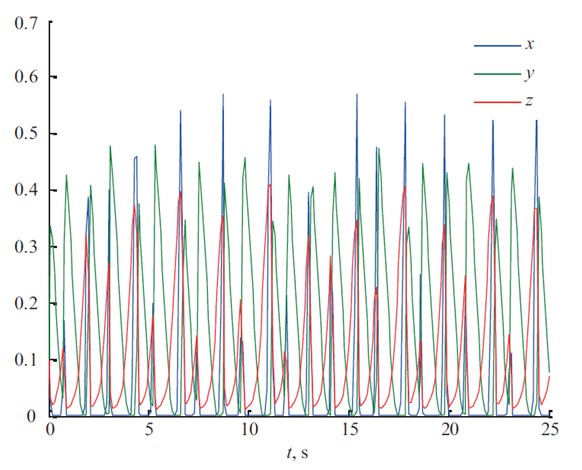
Objectives. To develop and test a method for solving the inverse problem of chemical kinetics for estimating the frequencies of elementary stages of complex chemical reactions occurring in a chaotic regime.

Methods. The method is based on the representation of nonstationary experimental data on reagent concentrations and the rates of their change in the form of a matrix of a particular structure.

Results. The effectiveness of the method is demonstrated by examples of reactions proceeding according to stage schemes similar to the Willamowski–Rossler mechanism, characterized by undamped aperiodic oscillations.

Conclusions. The method allows the frequencies of stages for reactions proceeding according to mechanisms with non-monotonic dynamics of any complexity to be determined with high accuracy.

CHEMISTRY AND TECHNOLOGY OF ORGANIC SUBSTANCES

540-554 27
Abstract

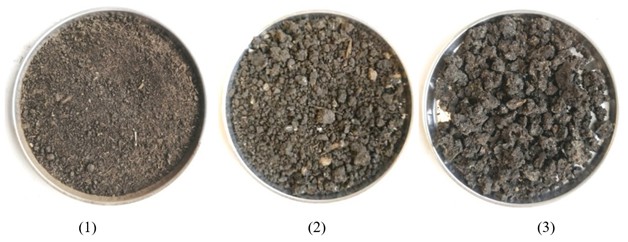
Objectives. To study the influence of compositional variability (different ash and organic matter contents) of sewage sludge on the characteristics of synthesis gas (syngas) and to determine the yield of products in the entire chain of conversion of sewage sludge to methanol through the stage of syngas production by two-stage pyrolysis.
Methods. Syngas was produced by a two-stage pyrolysis method. After heating sewage sludge from 20 to 1000°C in an oxygen-free medium, heterogeneous thermal cracking of the volatile products was carried out in a biochar medium at 1000°C. The syngas was converted to methanol on a CuZnAl catalyst in an isothermal flow heat-pipe reactor at a feedstock feed rate of 600 h−1, an internal reactor pressure of 5 MPa, and temperatures in the catalyst bed of 205, 215, and 225°C. The resultant syngas having a CO2 content of less than 0.5 vol % and a H 2/CO ratio of 1.8 was used as feedstock for methanol production.
Results. The experimental studies of syngas production from sewage sludge demonstrated the active formation of syngas during twostage pyrolysis in the temperature range of 140–600°C regardless of the ash content of the sludge. The H2/CO ratio in the syngas produced by two-stage pyrolysis of sewage sludge was shown to depend on the H/O atomic ratio in the sludge composition. Crude methanol was obtained at maximum yield and purity at a temperature of 225°C in the catalyst bed. The overall conversion of carbon monoxide was 43.6%.
Conclusions. Variability in the composition of sewage sludge significantly influences quantitative parameters to a large extent in terms of the specific volume yield of syngas and insignificantly terms of its composition. No qualitative influence was exerted by the difference in the types of sewage sludge on syngas production. The experimental studies showed that 1 kg of sewage sludge with a relative moisture content up to 5 wt % can produce 1.1 nm3 of syngas and a further 220 g of pure methanol.

CHEMISTRY AND TECHNOLOGY OF MEDICINAL COMPOUNDS AND BIOLOGICALLY ACTIVE SUBSTANCES

555-564 22
Abstract

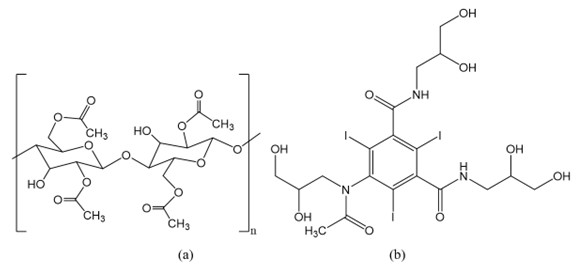
Objectives. Among the materials used for embolization, liquid embolizing agents based on solutions of biocompatible polymers attract particular interest. Such compositions are capable of targeting and reliably occluding a branched vascular network by forming solid emboli directly in the patient’s body. The safety and effectiveness of such materials are determined by the stability of the initial composition and the resulting emboli. This article presents a long-term study of the stability of embolizing solutions of a polymer (cellulose diacetate) and a radiopaque additive iohexol in dimethyl sulfoxide, as well as emboli based thereon, in aqueous media.

Methods. The stability of the initial solutions exposed to 60°C for 45 days (“accelerated aging” corresponding to three years of storage at 23 ± 2°C) was studied by rotational viscometry using a Brookfield DV2T RV rotary viscometer equipped with a working unit in the form of two coaxial cylinders and by ultraviolet-visible spectrophotometry using a Cary 60 UV-Vis spectrophotometer. The long-term stability of emboli in aqueous media was studied by gel permeation chromatography using a Gilson chromatograph (Japan) with refractometric detection and by gas chromatography using an Agilent 6890N chromatograph with a DB-5MS column (30 × 0.25 × 0.5 μm), equipped with an Agilent 5973 N mass spectrometric detector.

Results. During “accelerated” storage of cellulose diacetate and iohexol solutions in the dark, no changes in the viscosity coefficient (0.268 ± 0.0049 Pa∙s at 25°C) and the quantitative content of bound iodine (50.1 ± 1.0 mg/mL) were observed. However, when iohexol solutions in dimethyl sulfoxide were stored under daylight, free iodine was separated in minor quantities. When emboli consisting of cellulose diacetate were stored in an aqueous medium for eight years, the molecular weight of the polymer (60 kDa) remained unchanged. The degradation products of cellulose diacetate, expected in the aqueous extract, were also absent.

Conclusions. The model embolic composition consisting of cellulose diacetate and iohexol in dimethyl sulfoxide is stable when stored in the absence of light. The as-formed solid emboli remain stable for at least eight years when stored in an aqueous environment.

BIOCHEMISTRY AND BIOTECHNOLOGY

565-581 201
Abstract

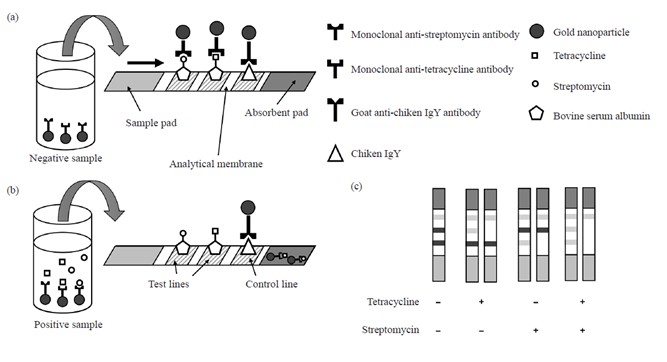
Objectives. To optimize indirect antibody immobilization on gold nanoparticles (GNPs) using anti-species antibodies for enhanced conjugate stability and to develop an immunochromatographic assay (ICA) for antibiotic detection in milk.

Methods. The GNPs were synthesized by reduction of tetrachloroauric acid in the presence of seed particles. The size of GNPs was determined spectrophotometrically according to literature data using a Thermo Fisher Scientific Varioskan LUX instrument. Monoclonal mouse antibodies to tetracycline and streptomycin were immobilized on the surface of the GNPs via anti-mouse antibodies. Conjugates of bovine serum albumin with tetracycline and streptomycin were obtained through Mannich reaction and click-reaction, respectively. The coupling ratio was determined by MALDI-TOF mass spectrometry on a Bruker RapifleX instrument. Immunoreagents were dispensed onto a nitrocellulose membrane using a BioDot ZX1010 dispenser. The assembled multi-membrane composite was cut into test strips using a KinBio ZQ4500 guillotine cutter. The test results were interpreted visually and using an Allsheng TSR-100 test strip reader.

Results. Following conjugate formation via indirect immobilization using anti-species antibodies, it was necessary to block residual binding sites on the anti-species antibodies in order to enhance solution-phase conjugate stability. As a result of optimizing the concentrations of immunoreagents, an ICA was developed for the simultaneous detection of streptomycin and tetracyclines in milk. The detection limit of the optimized ICA for tetracyclines and streptomycin was 2–7.5 and 25 ng/mL, respectively, for visual result interpretation, and 0.29–2.15 and 1.34 ng/mL, respectively, when using a test strip reader.

Conclusions. It is shown that the stability of the resulting conjugates in solution can be enhanced by blocking the free binding sites of the anti-species antibodies to prevent cross-linking of the nanoparticles caused by anti-species antibody binding.

582-593 33
Abstract

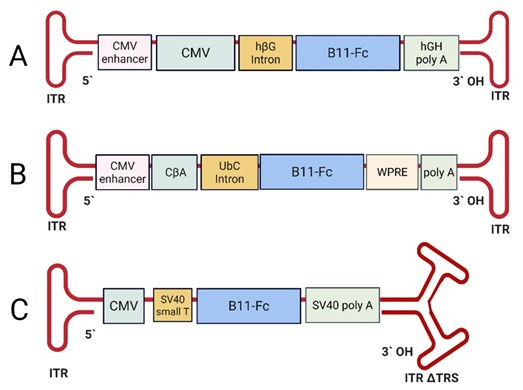
Objectives. To obtain and compare the efficiency of three recombinant adeno-associated virus (rAAV) variants expressing the gene of the modified single-domain antibody B11-Fc specific to botulinum toxin type A (BoNT/A): rAAV-DJ-CMV-B11-Fc, rAAV-DJ-CASI-B11-Fc, and scAAV-DJ-CMV-B11-Fc.

Methods. The AAV-DJ Packaging System (Cell Biolabs, USA) was used to create target constructs and obtain rAAV. Expression of the B11-Fc antibody gene in the obtained rAAV was assessed in vitro (HEK293, CHO-S, and C2C12 cell lines) and in vivo (BALB/c mice) using biolayer interferometry. The protective properties of the drugs were investigated on the model of lethal intoxication of mice with

BoNT/A.

Results. The rAAV-DJ-CMV-B11-Fc drug demonstrated a high level of B11-Fc antibody production both in vitro and in vivo without a significant decrease in concentration for at least 6 months. Comparable levels of B11-Fc production were demonstrated by rAAV-DJ-CASI-B11-Fc and scAAV-DJ-CMV-B11-Fc drugs in both in vitro and in vivo studies, with the exception of C2C12 cells, where rAAV-DJ-CASI-B11-Fc demonstrated the highest efficacy. When investigating the protective activity of the drugs against a lethal dose of BoNT/A, it was found that rAAV-DJ-CASI-B11-Fc possessed more pronounced activity in the first two days following administration as compared to rAAV-DJ-CMV-B11-Fc. However, at later stages, starting from 3 months, the rAAV-DJ-CMV-B11-Fc drug product demonstrated the most pronounced protection against high doses of BoNT/A.

Conclusions. The obtained data show that rAAV-DJ-CASI-B11-Fc should be used for the induction of protection against BoNT/A at early stages (24–48 h) after administration, whereas for protection against the highest doses of BoNT/A in the long term, rAAV-DJ-CMV-B11-Fc should be used. Studies into the specific activity of the drugs at later stages after administration are still ongoing.

SYNTHESIS AND PROCESSING OF POLYMERS AND POLYMERIC COMPOSITES

594-611 25
Abstract

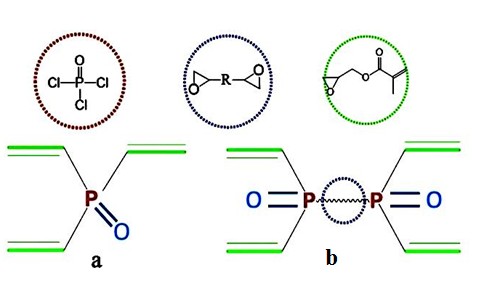
Objectives. The work sets out to investigate the influence of the structure of spacer in structure of phosphorus(III)-containing oligoester(meth)acrylates on physical and mechanical properties of polymers and their combustibility.

Methods. The physical and mechanical properties of polymers were determined using the following: DMA 242 E Artemis dynamic mechanical analyzer (NETZSCH, Germany); universal testing machine for standard tests on materials (ZwickRoell Group, Germany); GT-7045-HMH(L) impact test machine (Gotech Testing Machines, Inc., Taiwan); Q-1500 D derivatograph of the Paulic–Paulic– Erdey system (thermogravimetry, IOM, Hungary); Oxygen Index Module device for determination of burning behavior by plastic flammability testing according to oxygen index (Concept Equipment, United Kingdom); GT-7045-HMH(L) device for determination of the Vicat softening temperature (Gotech Testing Machines, Inc., Taiwan); SFT-110XW supercritical fluid extractor (Supercritical Fluid Technologies, Inc., USA) for supercritical fluid extraction with carbon dioxide.

Results. The influence of the spacer structure in the structure of phosphorus(III)-containing oligoester(meth)acrylates on the dynamic mechanical and physicomechanical properties of polymers was established. Comparative assessment of the impact of the spacer structure on properties of polymers was carried out in terms of their heat stability (thermogravimetric analysis) and combustibility (measurement of limited oxygen index). It is established that polymers having balanced physical and mechanical properties can be obtained by introducing spacer characteristics into the oligomer structure. Polymers obtained on the basis of phosphorus(III)-containing oligoester(meth)acrylates with spacers demonstrate considerable resistance to impact strength tests.

Conclusions. The achieved results testify to the possibility of obtaining polymers on the basis of phosphorus(III)-containing oligoester(meth)acrylates with spacer attributes that possess increased resistance to impact strength and thermal stability tests at an insignificant decrease in their combustibility.

612-621 14
Abstract

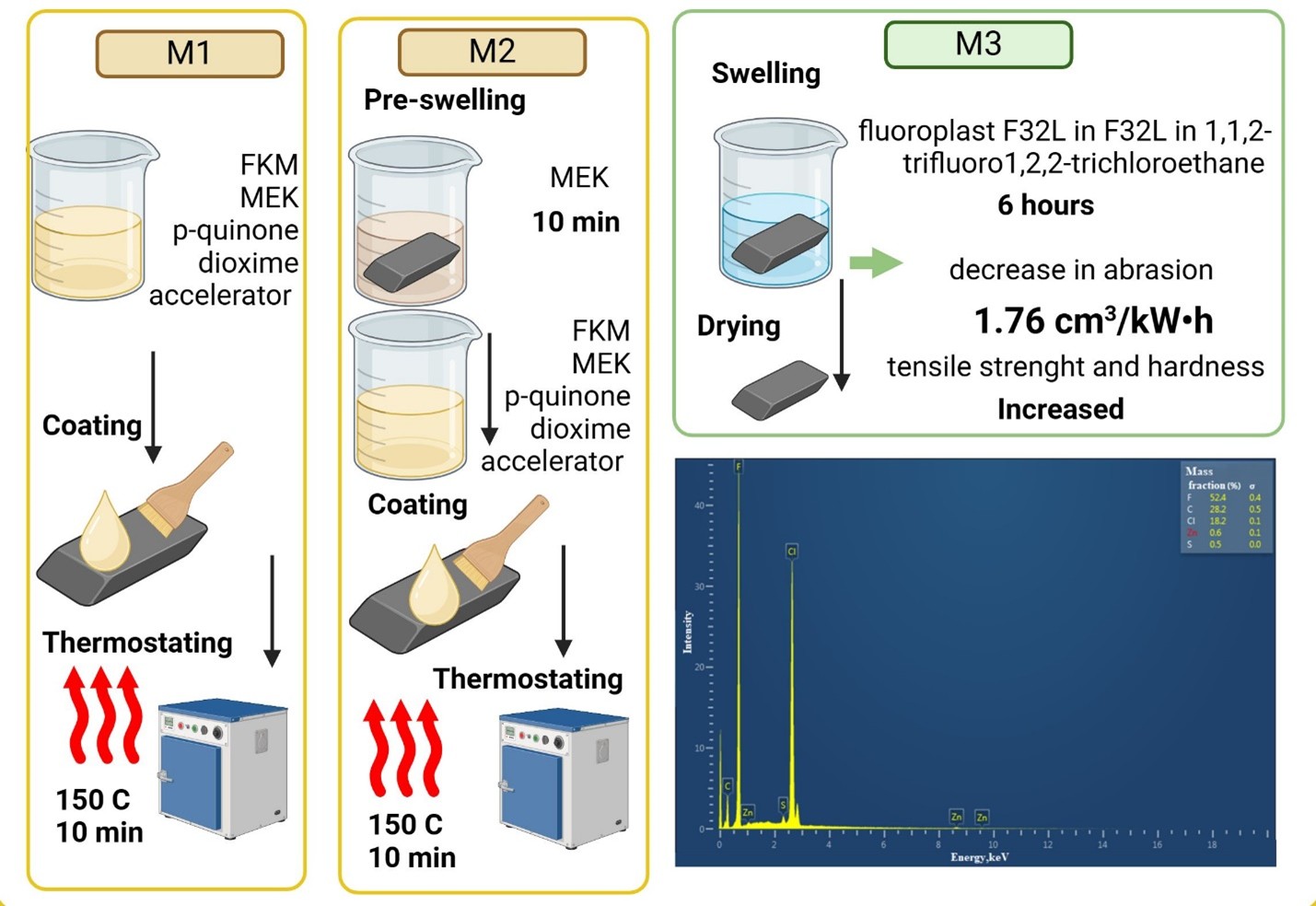
Objectives. The aim of this work is to investigate rapid surface treatment methods of nitrile butadiene rubber (NBR) using an elastomer composition based on fluoropolymer FKM-32 and fluoroplastic F32L. The article presents new methods for enhancing the mechanical and wear properties of NBR by applying surface coatings.

Methods. Abrasion tests were conducted using an MI-2 tribometer; determination of the tensile strength properties of the samples was performed using a DVT GP UG 5 universal testing machine (Devotrans, Turkey). Hardness was ascertained using a Shore A type durometer. Samples were cut out on a pneumatic punching press GT-7016-AR (GOTECH Testing Machines Inc., Istanbul, Turkey). Microstructure and elemental composition studies were carried out using a Vega 3 scanning electron microscope (TESCAN, Brno, Czech Republic) equipped with an X-Act (Oxford Instruments, High Wycombe, United Kingdom) energy-dispersive analysis attachment.

Results. The immersion of NBR in a 10% solution of poly(vinylidene fluoride-co-chlorotrifluoroethylene) (fluoroplast F32L) in 1,1,2-trifluoro-1,2,2-trichloroethane was found to result in the formation of a uniform fluoropolymer-based coating on the rubber surface. This coating results in a decrease in the abrasion value from 0.046 to 0.005 m3/TJ, corresponding to an increase in abrasion resistance. Furthermore, for rubbers coated by immersion in the fluoroplastic solution, the modulus at 100% and 300% strain increases by 86% and 44%, respectively, while the tensile strength increases by 20%, and the hardness increases by 9 units compared to the as-obtained NBR.

Conclusions. Regardless of pre-soaking in methyl ethyl ketone, the wear resistance of the synthetic rubber is not increased by surface treatment with elastomeric composition based on fluororubber FKM-32 grade followed by thermostating. However, surface-modification of NBR using the M3 method demonstrates better tribological performance and mechanical performance than the untreated sample. A complex of enhanced properties of surface-modified NBR-M3 can be effected by the presence of halogen atoms on the surface layer of the rubber sample.